Shaibu Unveils Two-Year Plan to Bridge 2-Million Coaching Gaps, Seeks NFF Collaboration
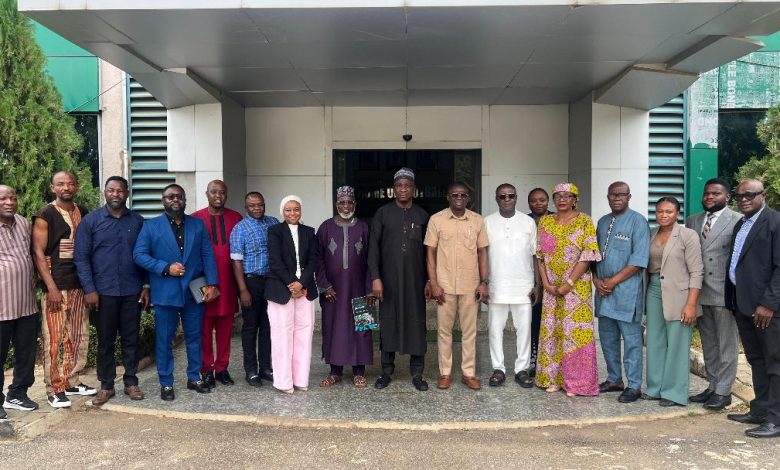
Director General of the National Institute for Sports (NIS), Comrade Philip Shaibu, has unveiled a bold two-year plan aimed at bridging two million coaching gaps across Nigeria’s sporting landscape.
He disclosed this during a condolence visit to the Nigeria Football Federation (NFF) following the passing of former NFA chairman, Alhaji Ibrahim Galadima.
Shaibu described Galadima as a great leader whose contributions will be missed nationally and within his community.
He emphasized that the NIS is determined to transform Nigeria’s coaching sector, noting that a recent matriculation of 232 students revealed that more than half were football coaches, underscoring Nigeria’s identity as a football nation.
He criticized past administrations of the institute for failing to live up to its mandate and pledged to reposition the NIS to match global standards such as the German Institute for Sports Science and the Australian Institute of Sports.
Shaibu highlighted ongoing reforms, including the decentralization of the institute with zonal offices in Yola, Kaduna, Jos, Enugu, Abeokuta, and plans for Benin City. He also revealed efforts to commence degree courses in collaboration with the National Universities Commission.
Commending the Ibrahim Musa Gusau-led NFF administration for impactful reforms and legacy projects such as the NFF-FIFA Players Hostel and new training pitches, Shaibu sought the federation’s collaboration to achieve the ambitious coaching plan.
Responding, NFF President Gusau described Galadima as a mentor and father figure, recalling their last discussion just two weeks before his passing.
He assured the NIS of full support, noting that the federation has prioritized coaching development, including organizing CAF C-License courses for women coaches and working toward staging a CAF A-License course.
NFF General Secretary, Dr Mohammed Sanusi, in his vote of thanks, advised the NIS to incorporate a diploma course in sports administration into its curriculum to further strengthen Nigeria’s sports management capacity.