NSC: Lagos’ grassroots sports system made it natural choice for National Intermediate Games, EKO 2026
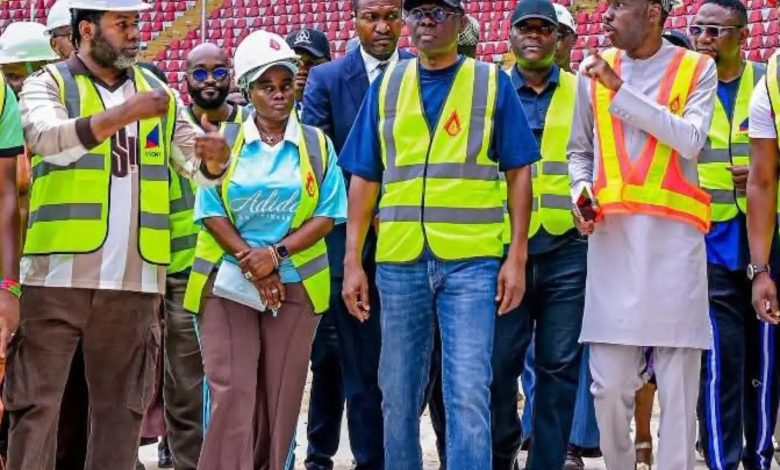
The National Sports Commission (NSC) has explained its decision to select Lagos State as host of the inaugural National Intermediate Games, EKO 2026, citing the state’s established grassroots sports development system, sporting infrastructure and proven capacity to stage major national and international events.
The Games, being organised under the Commission’s Renewed Hope Initiative for Nigeria’s Sports Economy (RHINSE), are designed to bridge the gap between grassroots participation and elite sport by creating a structured development pathway for athletes aged 15 to 18.
According to the NSC, the age bracket represents a critical phase in athlete development when emerging talents require quality competition, monitoring and support to progress to the elite level.
Director-General of the NSC, Bukola Olopade, said Lagos was the natural choice for the maiden edition because of its ability to develop athletes through school and grassroots competitions into elite performers.
Speaking at the recent unveiling of the Games’ logo and mascot, Olopade said Lagos had consistently demonstrated its capacity to bridge the gap between grassroots sports and the highest level of Nigerian sport.
‘Lagos will always put everything out to ensure things are done properly as we are about to kick-start what will be the best sports fiesta we will ever see in this country,” Olopade said.
‘Deliberately, Malam Shehu Dikko and I knew that the only state that could bail us out and bridge that gap that has been so obvious in our sports is Lagos.
“Not just in organising, but proactively, Lagos has created a system that brings schoolchildren to the top echelon of our sports, and it is only fitting that we bring the next level of growth in sports to Lagos to host and showcase that we can do things better than people observe.’
The Games will also showcase a strong Lagos identity, with the official logo incorporating cultural and sporting symbols associated with the state.
The design features the Eyo cap, Opambata, the ‘Eko’ inscription, colourful swirls and three ascending stars, while the official mascot, Lasgidi, further reflects the cultural character of the host city.
Lagos’ selection was also influenced by the concentration of sporting facilities available to support a multi-sport national event.
Teslim Balogun Stadium will serve as the main arena, while other venues include the National Stadium, Surulere; Rowe Park Sports Centre, Yaba; Agege Township Stadium; Mobolaji Johnson Arena, Onikan; and the Elegbata Sports Complex.
The state has also secured access to institutional facilities, including Lagos Tennis Club, Onikan, TBS Cricket Oval, Yaba College of Technology and the University of Lagos, providing venues capable of accommodating the various sporting disciplines.
The organisational capacity of Lagos was another key consideration. Governor Babajide Sanwo-Olu earlier this year constituted a Local Organising Committee to oversee the delivery of EKO 2026.
The LOC is chaired by the Deputy Chief of Staff to the Governor, Sam Egube, while the Chairman of the Lagos State Sports Commission, Lekan Fatodu, and Commissioner for Youth and Social Development, Mobolaji Ogunlende, serve as co-chairmen. Several sub-committees have also been established to oversee different aspects of the Games.
The LOC has described EKO 2026 as a structured talent-transition platform designed to connect grassroots promise with podium-ready performance.