Does the Shirt Number Still Mean Anything in Modern Football?
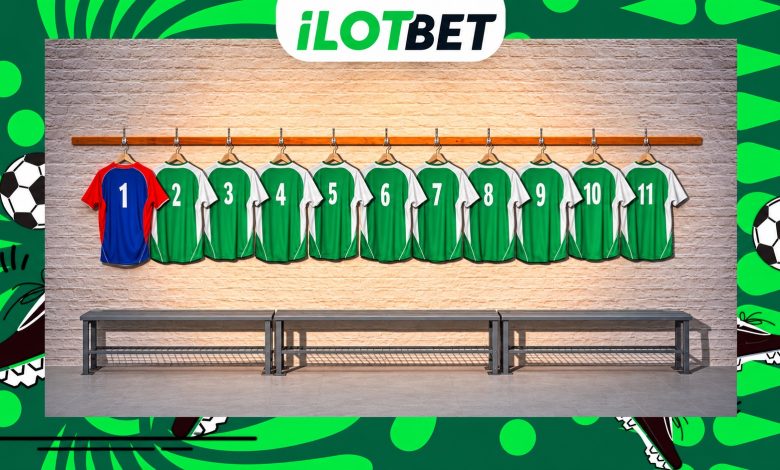
For generations, football fans did not need a team sheet to identify the most creative player on the pitch. They simply looked for the number 10. The goalkeeper wore number one, defenders occupied the numbers behind him, midfielders followed, and the forwards completed the traditional starting XI. It was a footballing language understood across generations.
But that language is gradually disappearing. Today, a striker can wear number 30, a defender can proudly claim number 10, and a midfielder might choose number 47 without raising an eyebrow. Players are increasingly defined by their performances rather than the numbers on their backs. This raises an interesting question: in an era where football has evolved tactically, commercially and culturally, do shirt numbers still matter?
The answer, however, is not as straightforward as it might seem. Shirt numbers have not become meaningless; their significance has simply changed.
Traditionally, numbers were closely connected to positions. The goalkeeper wore number one, full-backs occupied two and three, central defenders wore four and five, while six and eight were associated with midfield responsibilities. The number nine belonged to the centre-forward, while seven and 11 were traditionally reserved for wingers. At the centre of it all was the number 10, usually the team’s creative heartbeat.
Players such as Diego Maradona, Pelé, Zinedine Zidane and Lionel Messi helped elevate the number 10 beyond a positional identifier. It became a symbol of responsibility, creativity and influence. Wearing it often suggested that a player was expected to make things happen when a team needed inspiration.
However, football’s evolution has gradually weakened that relationship. The introduction of permanent squad numbers in English football in 1993 was a significant turning point. Players no longer needed to change shirts according to their position in the starting XI, opening the door to greater personal choice.
More importantly, tactical development has made it increasingly difficult to associate a particular number with a specific role. Modern footballers are expected to occupy different spaces, perform multiple responsibilities, and adapt to the demands of a match. A full-back might move into midfield, a winger might operate centrally, and a striker might drop deep to create opportunities for teammates.
Consequently, the number on a player’s back tells us considerably less about what they actually do on the pitch.
Consider Manchester City’s Phil Foden, who wears number 47, or Declan Rice, Arsenal’s influential midfielder, who wears number 41. Neither number prevents them from occupying important positions in their respective teams. Their influence comes from their footballing ability, not the traditional prestige associated with their shirts.
There is also a growing commercial and personal dimension to shirt numbers. For some players, a number represents family connections, childhood memories, personal milestones or an opportunity to establish a recognisable identity. Johan Cruyff’s association with number 14 remains one of football’s most famous examples of a player making an unconventional number iconic.
Yet, dismissing traditional numbers altogether would be equally misguided. The number 10 still carries enormous cultural significance, while the terms number six, number eight and number nine remain important tactical descriptions. Coaches, analysts and supporters continue to use them to explain specific midfield and attacking responsibilities, regardless of what players actually wear.
Perhaps that is where the distinction lies. There is a difference between wearing a number 10 shirt and playing as a number 10.
Modern football has not killed the importance of shirt numbers; it has separated their symbolic meaning from their tactical purpose. The number 10 might no longer guarantee that its wearer is the team’s best player, just as wearing number 47 does not make someone any less influential.
Ultimately, footballers create the legacy of their numbers, not the other way around. And while the traditional hierarchy of 1 to 11 may never completely disappear, the modern game has made one thing clear: greatness cannot be stitched onto the back of a shirt.