Editorial: AFN’s Botswana Trip Raises Questions on Competence and Vision
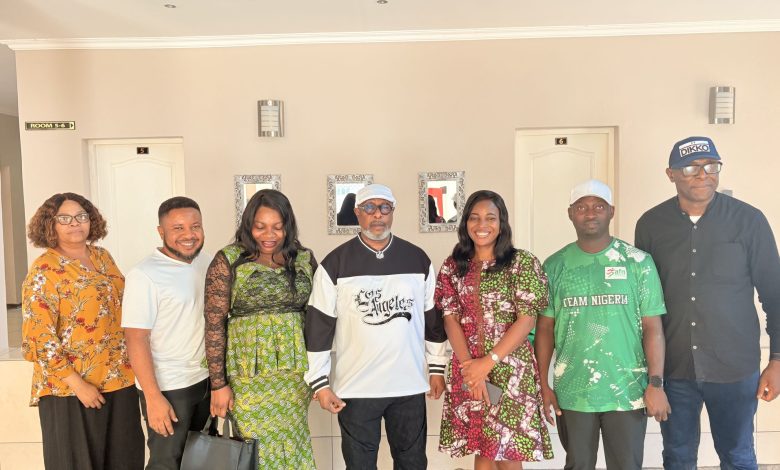
The Athletics Federation of Nigeria (AFN) is facing renewed criticism after traveling to Botswana with four relay teams, accompanied by only one coach and four non-coaching officials, in pursuit of World Relays qualification.
While the men’s 4x400m team secured a ticket, stakeholders are asking the critical question: how can a federation travel with just one coach for four relay squads of at least four members each, yet include four officials with no technical role at the event?
The Botswana meet was neither a Confederation of African Athletics (CAA) championship, nor continental games, nor a World Athletics championship where congress meetings or training programmes might justify such a delegation.
The delegation included AFN President Tonobok Okowa, Secretary General Israel Inwang, and Second Vice President Aku Aghazu.
Aghazu’s membership has been flagged as unconstitutional, as she did not meet the requirements for board membership.
In addition, other members have been co-opted by the president in violation of the federation’s constitution, with one such member included in the Botswana trip, similar to what occurred at the World Championships in Tokyo in 2025, where at least two co-opted members were part of the delegation.
This recurring pattern of irregular appointments, as it were, has raised concerns about legitimacy and governance within the AFN.
The AFN bypassed the MTN CHAMPS in Jos, a competition that also offered qualification opportunities and had already produced success in Calabar, where the women’s 4x400m team qualified. Instead, the federation chose the Lefika International Relays in Gaborone, Botswana, one of the lowest-ranked meets on the world athletics calendar.
Stakeholders argue the issue is not simply about rankings but about logic: why spend millions of naira traveling thousands of miles when the same qualification could have been attempted at home, in a competition ranked even higher?
Critics say the federation’s actions reflect poor judgment, lack of accountability, and a failure of vision.
The presence of both the president and secretary general at a low-tier event, while athletes abroad continue to excel on U.S. collegiate circuits and European tours, underscores the disconnect between Nigeria’s athletic talent and its administration.
The lingering issue of fielding overaged athletes in sanctioned competitions further compounds doubts about the federation’s competence.
The central question remains: is Nigerian athletics being managed with the seriousness and foresight it deserves, or has administration sunk to its lowest point while athletes themselves continue to shine globally?