EDITORIAL: Diaspora Athletes to Feature at Intermediate Games Amid Warnings of Domestic Neglect
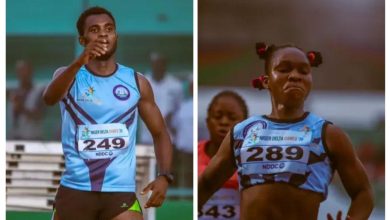
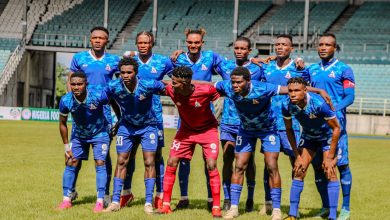
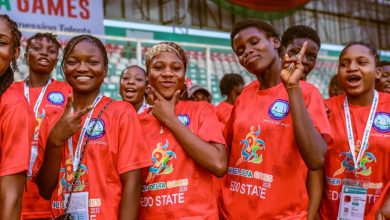
The National Sports Commission (NSC) has announced that 50 Invited Diaspora Athletes (IDAs) will compete at the maiden edition of the National Intermediate Games in Lagos later this year.
The initiative, hailed by NSC Director General Bukola Olopade as a ‘game changer’ for Nigerian sports, is designed to harness the talents of Nigerians abroad under the Renewed Hope Initiative for Nigeria’s Sports Economy (RHINSE).
But as the country celebrates the arrival of athletes trained in world-class facilities overseas, critics warn that the move exposes deeper cracks in Nigeria’s domestic sports system.
Recent cases highlight Nigeria’s struggle to nurture and retain its own athletes.
Favour Ofili, one of the nation’s brightest track prospects, switched allegiance to the United States after years of frustration with inadequate support at home.
Similarly, sprinter Favour Ashe, who once lit up Nigerian athletics, openly lamented the absence of infrastructure for elite training in Nigeria, noting in an interview that ‘there is no facility for elite athlete training in Nigeria.’
The story of hammer thrower Annette Echikunwoke underscores the consequences of administrative incompetence.
Born in the United States, she switched allegiance to Nigeria in hopes of representing her ancestral country at the Tokyo 2020 (2021) Olympics.
Yet, due to bungled paperwork and poor coordination by Nigerian sports administrators, she was barred from competing.
Disillusioned, Echikunwoke later reverted to representing the U.S., winning for the USA a first ever Olympic medal in the women’s Hammer Throw three years later at the Paris 2024 Olympics.
Echikunwoke’s case symbolized Nigeria’s inability to manage its own talent pipeline.
The infrastructure gap remains glaring. FIFA has certified only one stadium in Nigeria, the Godswill Akpabio Stadium in Uyo, as meeting international standards for hosting matches.
There is also the case of Nigeria’s first Olympic cyclist, Ese Lovina Ukpeseraye who has returned home and announced her retirement from professional cycling at just 26 years old.
Ukpeseraye made history by representing Nigeria at the Paris 2024 Olympics, but her journey was marred by challenges that exposed the country’s fragile sports system.
She famously had to borrow a bicycle from the German team to compete, after qualifying late and finding that Nigeria had not provided her with the necessary equipment.
This stark reality raises questions about how Nigeria can attract and sustain elite athletes when even basic facilities for training and competition are lacking.
While the IDA program promises immediate benefits, raising Nigeria’s competitive edge and showcasing diaspora talent, sports analysts argue it risks becoming a cosmetic fix.
Without tackling corruption, age falsification, poor coaching exposure, and the absence of grassroots development, Nigeria may end up importing talent while failing to cultivate its own.
‘The irony is painful,’ one observer noted. ‘We cannot take care of the talents we already have, yet we are looking abroad to import more. Until the system is fixed, the diaspora initiative will remain a bandage on a festering wound.’
As Lagos prepares to host the Intermediate Games, the spotlight will shine on the diaspora athletes. But the bigger test lies beyond the competition: whether Nigeria can build a transparent, well-funded, and sustainable sports ecosystem that nurtures homegrown talent.
Without that, the promise of Invited Diaspora Athletes may remain a fleeting spectacle rather than a foundation for lasting progress.