Editorial: NSC’s Youth Tour Sparks Debate on Cash Rewards for Minors
The National Sports Commission’s (NSC) ongoing Youth Appreciation Tour has been hailed as a bold step in celebrating Nigeria’s emerging sports talents.
Yet, the decision to publicly hand oversized cheques worth millions of naira to U18 athletes in front of their classmates has ignited a storm of debate over propriety, equality, and morality.
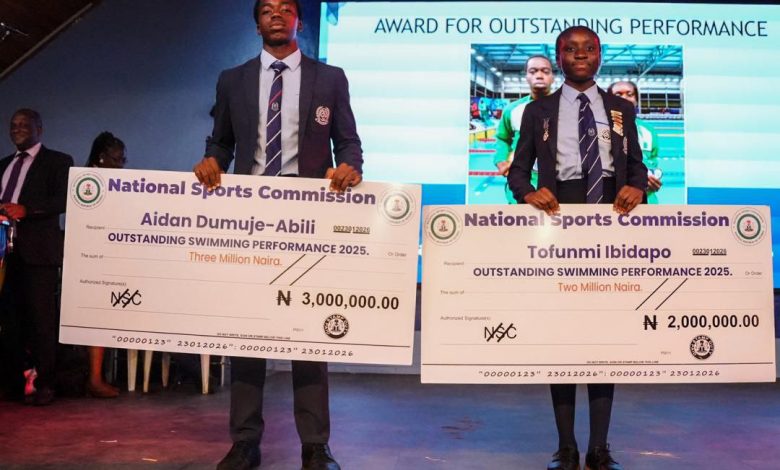
At Nigerian Tulip International College in Abuja, athletes like Rosemary Chigozie Nwankwo and Miracle Oluebube Ezechukwu were honoured with cheques of ₦3 million each, while others received between ₦1 and 2 million.
Similar ceremonies in Asaba and Lagos saw medal winners rewarded in front of peers, with NSC officials praising their achievements.
The cheques, emblazoned with the amounts, drew loud applause. But what registered most in the minds of students was not the honour, it was the money.
Critics argue that schools are meant to be environments of learning and equal opportunity. Publicly displaying millions of naira risks turning recognition into a spectacle of wealth rather than a sober celebration of achievement.
It also raises questions about whether such gestures are appropriate for minors who are still navigating their education.
By rewarding only a handful of athletes with visible cash prizes, the NSC inadvertently creates inequality. Classmates who excel in academics, arts, or leadership watch from the sidelines, unrecognised.
This imbalance risks sending the message that sports alone guarantee wealth and status, while other pursuits are undervalued.
Morally, the issue is whether giving minors large financial rewards serves their best interests.
Nigerian law defines minors as anyone U18, who cannot legally enter binding contracts or independently manage such sums.
Public cash rewards expose them to exploitation, unhealthy peer pressure, and the temptation to prioritise money over education.
Globally, best practice avoids direct cash rewards for U18 athletes. Instead, scholarships, trust funds, and structured development packages are used to safeguard their growth.
In the U.S. and Europe, recognition ceremonies highlight achievement, while financial support is channeled into education and training.
Observers note that Nigeria’s culture of public cash rewards stems from symbolism and optics.
Money is seen as the ultimate proof of recognition, and oversized cheques make for dramatic headlines. Yet, this preference for immediate gratification often undermines long-term investment in systems that truly nurture talent.
Experts urge the NSC to rethink its approach.
Instead of cheques that flaunt millions, the Commission could:
Provide scholarships to secure athletes’ education.
Invest in training facilities, coaching, and medical care.
Establish trust funds accessible when athletes reach adulthood.
Celebrate achievements with certificates, mentorship, and structured support rather than cash spectacles.
The Youth Appreciation Tour is commendable in intent, but flawed in execution.
By throwing money around carelessly, the NSC risks diverting young athletes’ focus from education and structured training.
At this stage of their lives, what they need most is guidance, opportunity, and sustainable support and not oversized cheques that make money the headline.
If Nigeria truly wants to build champions, it must move beyond the culture of cash rewards and embrace responsible, globally aligned practices that protect and empower its future stars.