NSC Defends Young Athletes Initiative After Criticism of ‘Obscene’ Cheque Displays
Critics Slam Commission for Optics as Elite Athletes Earn Less Support
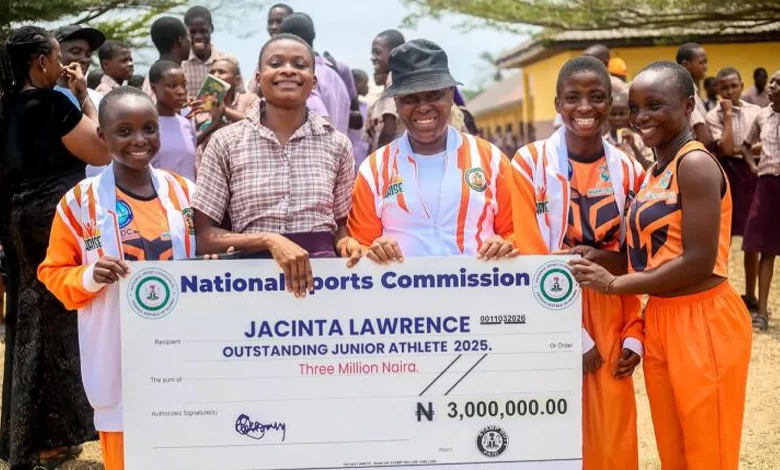
The National Sports Commission (NSC) has sought to clarify the motives behind its Young Athletes Appreciation Initiative after criticism from SportsNow described the programme as an unnecessary and ‘obscene display of money to minors’ in front of their peers.
Director General Bukola Olopade, speaking to The Guardian, defended the initiative as a groundbreaking effort in Nigerian sports history.
‘It is part of my responsibility to educate the public about the ongoing Young Athletes Appreciation Initiative. We should acknowledge the positive impact of this gesture, innovation, and initiative, which has motivated many athletes in just two weeks,’ Olopade said.
He explained that athletes such as Tofunmi Ibidapo and Aiden Dumuije Abili at Grange School in Lagos, and Majekodunmi Bisola in Abeokuta, had each been awarded ₦3 million. According to Olopade, the funds were not handed directly to the athletes but paid to their schools or parents.
‘The athletes will receive symbolic checks, but the funds go directly to their schools or parents. For government school athletes, we paid the parents directly, considering their fees are lower,’ he noted.
However, critics argue that the optics of presenting oversized cheques to minors in front of classmates were unnecessary, and that a simple announcement of scholarships worth the same amount would have sufficed.
Critics also see Olopade’s explanation as an afterthought after SportsNow had criticized the move.
SportsNow’s editorial suggested the initiative was more about publicity than substance, accusing the NSC of ‘playing to the gallery to give the impression of success, not minding the quality of performances they are celebrating.’
Olopade did not respond to criticisms that Nigeria’s elite athletes, those expected to fly the country’s flag at the Commonwealth Games in Glasgow later this year, the World Championships in 2027, and the Olympics in 2028, receive less than ₦7 million, with those in Category B paid even less while athletes still in secondary schools paid either half or in some cases more than half of what the elite athletes got.
Observers say this disparity highlights the NSC’s lack of coherent strategy for managing elite athletes, while focusing instead on symbolic gestures.
The initiative has continued with stops across the country, including Uyo, Akwa Ibom State, where teenage sprint sensation Jacinta Lawrence Andrew, an SS2 student of Community Secondary School, Ibiaku Itam, was recognised.
Jacinta won silver in the girls’ 400m at the maiden African School Games in Algeria, gold at the African Youth Games in Angola, and was part of the Nigerian team that qualified for the World Athletics Relays.
Despite these achievements, the debate remains whether the NSC’s approach prioritises optics over meaningful investment in athletes who will represent Nigeria on the global stage.