Nigerian Athletes Confront Brutal Beijing 2027 Entry Standards
Okon, Fakorede, Udo, Othrs Must Rewrite Records to Qualify
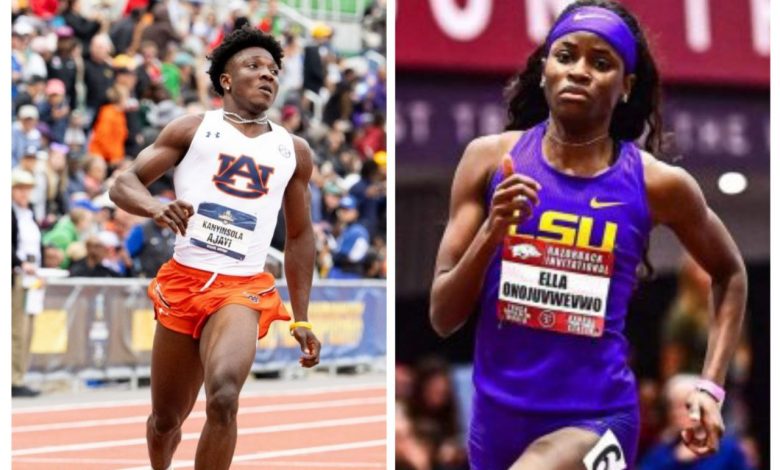
The road to the World Athletics Championships in Beijing in 2027 has been paved with some of the toughest entry standards in history, and for Nigerian athletes, the challenge is nothing short of monumental.
In the sprints, Israel Okon, Adekalu Fakorede and others must break the 10‑second barrier for the first time in their lives, and not just any sub‑10, but at least 9.95 seconds, the new entry standard.
Nigerian women sprinters face an equally daunting task, needing to run 10.96 seconds to qualify.
The 400m is no less punishing. Rising star Edidiong Udo, who recently dipped under 45 seconds, must slash his time to 44.45 seconds. Veteran Chidi Okezie, who has run inside 45 seconds in each of the past two seasons, must also set a new lifetime best.
On the women’s side, Nigeria’s 51‑second runners, Chioma Nwachukwu, Esther Joseph, Blessing Akintoye, Patience Okon George, and Chidimma Agu, must break 51 seconds and push toward the 50.00 threshold, effectively entering the 49‑second zone to stand a chance of flying to Beijing.
The hurdles demand historic breakthroughs. In the 100m hurdles, Adaobi Tabugo must consistently run inside 13 seconds and set a new personal best of 12.60 seconds. In the 110m hurdles, a new Nigerian record of 13.18 seconds must be set, a mark no Nigerian has neared since Antwon Hicks, the ‘imported American,’ set the national record of 13.27 seconds in 2016.
For the 400m hurdles, Nigerians must aim for 48.00 seconds (men) and 54.00 seconds (women). Only one Nigerian man has ever run faster than 48.00, while no Nigerian woman has hit 54.00. In fact, only Ajoke Odumosu (54.40) has ever broken 55 seconds in the event.
The jumps require feats bordering on the impossible.
Nigerian long jumpers must leap 8.25m, just 2cm shy of Yusuf Ali’s 8.27m national record, while women must reach 6.86m, nearly at the 7m mark.
In the triple jump, a new Nigerian record of 17.35m will be required for men to qualify. In the high jump, a second Nigerian capable of clearing 2.30m must emerge, following in the footsteps of Antony Idiata, who set the national record of 2.32m back in 2000.
The throws are equally unforgiving. In the hammer, Sade Olatoye must surpass her lifetime best of 71.78m from 2024 and aim for the 74.00m standard.
In the discus, Chioma Onyekwere and Obiageri Amaechi must at least replicate their personal bests to secure Beijing tickets. For the shot put, Nigerians must eye 21.50m (men) and 19.30m (women).
Only two Nigerian men have ever thrown beyond 21m, and have surpassed the entry standard. For the women, no Nigerian has yet hit 19m, meaning new national record holder Jessica Oji, who recently set the mark at 18.50m, must throw beyond that to stand a chance.
The 800m standard is another mountain: 1:43.00 for men and 1:57.50 for women, times that would demand breaking new ground and inevitably setting fresh national records.
With World Athletics shifting emphasis toward rankings, 60% of qualifiers will come via world rankings and only 40% via entry standards, Nigerian athletes must not only chase historic marks but also maintain consistency across the qualification period.
As it stands today, only about ten Nigerian athletes have achieved marks better than the entry standards set by World Athletics, proof that Beijing 2027 will demand nothing less than record‑breaking performances and career‑defining breakthroughs.