Purported FIFA Letter on Gusau Resignation Contains Statutory Contradiction
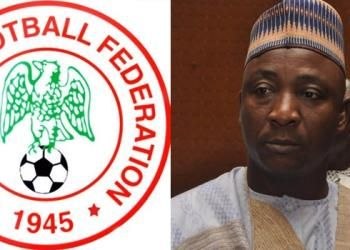
A purported letter from FIFA concerning the resignation of former Nigeria Football Federation (NFF) President Ibrahim Musa Gusau has raised fresh questions over the circumstances surrounding his departure, the role of the NFF Congress and the statutory provisions cited in the document.
The letter, dated September 1, 2026 and purportedly signed by FIFA Secretary General Mattias Grafström on behalf of the FIFA Council, claims that FIFA is concerned by reports that Gusau resigned following a directive from the Presidency of the Federal Republic of Nigeria.
It reportedly gives the Nigerian authorities seven days to provide clarification and warns that failure to do so could lead to the suspension of the NFF from FIFA and CAF competitions and activities.
However, the purported communication contains a notable statutory contradiction. It invokes Articles 14 and 19 of the FIFA Statutes in addressing the independence of member associations, which is broadly consistent with FIFA’s framework.
Article 19 specifically deals with the independence of member associations and their bodies, while Article 14 sets out the obligations of member associations. But the letter subsequently states that violations could lead to sanctions ‘as stipulated in Article 13 of the FIFA Statutes.’
Article 13 is actually titled ‘Member associations’ rights,’ while Article 16 contains FIFA’s specific provisions on suspension of a member association.
The discrepancy raises questions about the authenticity of the document and, if it is genuine, the legal basis for the wording used in the communication. The apparent error is particularly significant because the document threatens one of FIFA’s most serious sanctions against the NFF.
The purported letter also raises questions about the information upon which FIFA allegedly based its intervention. FIFA reportedly claims that Gusau’s resignation followed a directive from the Presidency, yet Gusau and former NFF General Secretary Mohammed Sanusi appeared before the media and openly announced their resignations.
The NFF subsequently confirmed the mass resignations.
The circumstances therefore leave an important unanswered question: did FIFA receive an official communication from the Presidency stating that Gusau and the NFF Executive Committee had been directed to resign, or was the allegation based on media reports, third-party information or other representations?
The question is particularly relevant because the purported FIFA letter does not identify the source of the information on which it based the allegation of external pressure.
There is also an apparent issue concerning the role of the NFF Congress. The NFF Statutes designate Congress as the federation’s supreme and legislative body and provide mechanisms for dealing with vacancies on the Executive Committee.
Where more than half of the Executive Committee positions become vacant, the statutes provide for an Extraordinary Congress to be convened to address the situation.
That raises another fundamental question: in a situation involving the mass resignation of elected officials, should the NFF’s supreme decision-making organ not first determine the federation’s next course of action in accordance with its statutes?
The purported FIFA letter instead warns that a FIFA/CAF Normalisation Committee could be appointed to run the daily affairs of the NFF and organise elections. While FIFA’s regulations do provide for normalisation committees in certain circumstances, the apparent absence of any discussion in the letter about the constitutional role of the NFF Congress is likely to attract attention in Nigeria.
FIFA’s principle of protecting the autonomy of member associations is well established. But the present controversy is whether protecting that autonomy requires FIFA to intervene before the NFF’s own constitutional mechanisms have been exhausted.
The purported communication has not been independently authenticated by FIFA.
If FIFA confirms the letter, it will also be expected to clarify the source of its information concerning the alleged Presidential directive, the statutory basis for the threatened suspension and the role it expects the NFF Congress to play in resolving the current leadership crisis.
The controversy comes amid sweeping changes in Nigerian football following the resignation of Gusau, Sanusi and members of the NFF Executive Committee, with the National Sports Commission involved in the reform process and interim arrangements announced for the NFF Secretariat.
Until FIFA authenticates the document, however, the claims contained in the purported letter remain unverified.