Victor Okorie: ‘Oregon Was Not the Destination, It Was the Beginning’
AFN Performance Director Urges Nigerian Athletes to Believe After WU20 Experience
Performance Director and Athletes Liaison Victor Okorie has described Nigeria’s participation at the 2026 World U20 Championships in Oregon as the beginning of a new era for Nigerian athletics, insisting the country leaves the championships with renewed confidence and belief in its young athletes.
Nigeria finished among the 24 nations that won at least one gold medal at the championships, but Okorie believes the significance of the country’s participation goes beyond the medal table. He said the emergence of a new generation of athletes provided perhaps the strongest reason for optimism about Nigeria’s future.
‘For me, this championship has been about more than competition. It has been about witnessing the emergence of a new generation and seeing, perhaps for the first time in a long time, the unmistakable signs of what Nigerian athletics can become,’ Okorie said.
He also praised the leadership of the National Sports Commission under Chairman Mallam Shehu Dikko and Director-General Hon. Bukola Olopade, saying their direction has given him confidence that Nigerian sport is entering a new phase.
‘Their leadership gives me confidence that Nigeria has embarked on a new journey of greatness, a journey that can restore confidence in Nigerian sports, rebuild belief among our athletes, strengthen the structures around them, and create an environment where young Nigerians can dream again, believe again, and ultimately achieve greatness for their country,’ he said.
Okorie urged Nigerian athletes who competed in Oregon not to allow their results to define their careers, stressing that competing on the global stage as a junior should be viewed as an important step in a much longer journey.
He pointed to the careers of Chioma Ajunwa, Blessing Okagbare, Ese Brume and Tobi Amusan as evidence that junior results do not necessarily determine future success.
Ajunwa finished fifth in the long jump at the 1990 World Junior Championships before becoming Nigeria’s first individual Olympic athletics champion six years later, while Okagbare did not qualify for the 2006 World Junior long jump final before winning Olympic silver two years later.
Brume also failed to win a medal at the 2014 World U20 Championships before becoming a World Championship and Olympic medalist, while Amusan did not make the start line at the 2014 World Junior Championships but went on to become a world champion and world-record holder.
‘That is the message I want every young Nigerian athlete to take home from Oregon: A junior championship is not your final destination. It is only a chapter,’ Okorie said.
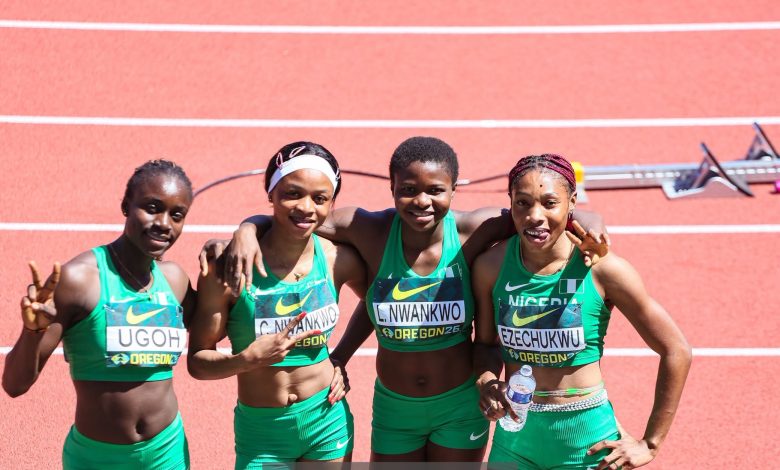
He also highlighted the progress of Chigozie Rosemary Nwankwo, Chiamaka Lucy Nwankwo and Miracle Ezechukwu, who emerged from a talent-identification competition organised in 2023 and three years later competed at the World U20 Championships in Oregon.
According to Okorie, their journey demonstrates the importance of identifying talent early and creating pathways that allow young athletes to develop.
‘Three years later, those names are no longer simply names on a list of promising young athletes. They are names that have appeared on start lists, competed on the world stage, and written their own chapters at the World U20 Championships in Oregon,’ he said.
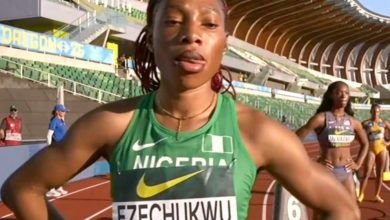
Okorie singled out Ezechukwu for particular praise, saying her performances in Oregon, including the speed and potential she displayed in the relay, offered another example of what early identification, opportunity and proper development can produce.
He stressed that building a successful athletics system requires more than discovering talented athletes, arguing that Nigeria must provide the coaching, competitions, facilities, support and environment required to turn potential into world-class performances.
‘The journey from a local competition in 2023 to the World U20 Championships in Oregon in 2026 is more than a timeline. It is proof of what is possible when opportunity meets talent,’ he said.
Okorie called for continued investment in structures, competitions, development programmes and clear pathways for young athletes, saying Nigeria must create an environment in which athletes can prepare properly, compete regularly and represent the country with confidence.
He also urged the athletes who competed in Oregon to remain focused despite setbacks, reminding them that future champions are not always identified by their junior achievements.
‘Do not allow one race, one jump, one throw, one result, or one championship to define the limits of your career,’ he said. ‘Some of you will become champions sooner than you imagine. Some of you may take a longer road. Some of you will experience setbacks. Some of you may surprise even yourselves. But keep going.’
According to Okorie, the performances in Oregon offered a glimpse of what Nigerian athletics could achieve in the years ahead.
Okorie concluded by describing Oregon as a starting point rather than an endpoint for Nigeria’s emerging athletics generation.
‘Oregon was not the destination. It was the beginning,’ he said. ‘Nigeria is rising. The future is ours to build. The journey of greatness has begun.’