Why Sack the Super Falcons Crew Before the NFF Probe Is Completed?
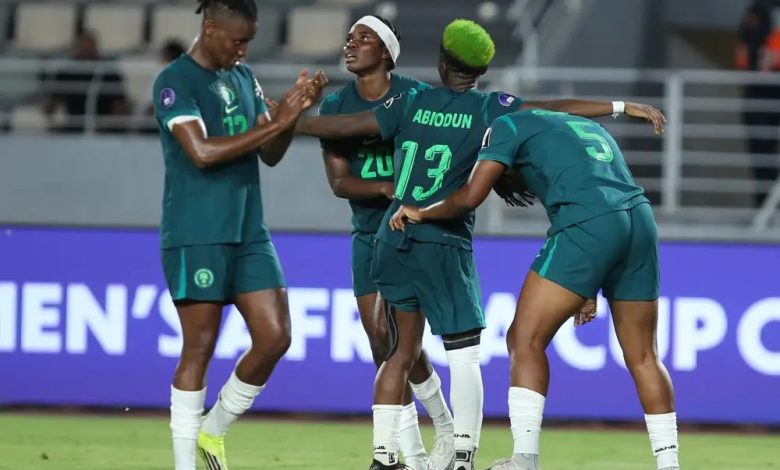
The Nigeria Football Federation’s decision to ask the Super Falcons’ technical crew led by Justine Madugu to step down on the same day it inaugurated a fact-finding committee to investigate the poor performances of Nigeria’s national teams has raised serious questions about accountability within the federation.
The NFF confirmed that its Executive Committee had asked members of the Falcons’ technical crew to relinquish their positions with immediate effect, following the team’s disappointing WAFCON campaign and failure to qualify for the 2027 FIFA Women’s World Cup.
On the same day, the federation inaugurated a committee headed by former NFF General Secretary Fanny Amun to investigate the direct and remote causes of the country’s recent national-team failures. The committee has been given two weeks to submit its report.
That timing is difficult to ignore. If the NFF genuinely wants the committee to establish why the Super Falcons and other national teams have underperformed, why remove the technical crew before the investigators have completed their work?
The central question is not whether the technical crew should be held accountable for results. Coaches must answer for tactical decisions, team selection, preparation and performances. But accountability cannot stop at the technical bench. It must extend to everyone responsible for creating the conditions in which the national teams operate.
What happens if the committee discovers that the technical crew was inadequately supported by the same federation that hired them? What if it finds problems involving preparation, logistics, funding, player welfare, communication, bonuses or other administrative decisions that affected the team’s performance?
The NFF’s decision to remove the coaches before those questions are answered risks creating the impression that responsibility has already been assigned before the investigation has begun.
The committee’s mandate, as announced by NFF President Ibrahim Gusau, is broad. It is expected to investigate the ‘direct and remote causes’ of Nigeria’s recent poor outings, with particular emphasis on the Super Falcons’ failure to qualify for the World Cup.
That mandate should not be reduced to an investigation of coaches and players alone.
The Super Falcons’ failure was undoubtedly a major sporting disappointment. Nigeria exited the WAFCON at the quarter-final stage for the first time after losing 1-0 to Cameroon and subsequently lost 2-1 to South Africa in the World Cup qualification play-off, ending the team’s historic record of appearing at every previous Women’s World Cup.
But if the NFF is serious about finding the root causes, then the investigation must examine the entire football ecosystem surrounding the team. That includes the federation itself.
There is also a credibility issue. An investigation is supposed to establish facts before conclusions are reached. By removing the technical crew at the beginning of the investigation, the NFF has potentially complicated the process.
Those coaches are now no longer in their positions and may reasonably feel that they have already been judged before being given an opportunity to present their side of the story.
More importantly, their removal could allow the federation to present the crisis as a technical failure rather than a systemic one.
That would be the easiest outcome, but not necessarily the most honest.
The NFF should therefore allow the Fanny Amun-led committee to do its job without interference and without a predetermined conclusion.
If the committee finds that Madugu and his assistants were responsible for the failures, then its report should say so. If it finds that the federation failed to provide adequate support, that should also be stated. And if responsibility is shared, the Nigerian football public deserves to know that too.
Anything less risks turning the fact-finding exercise into a public-relations exercise designed to buy time, protect reputations and shift blame.
The Nigerian football crisis is bigger than one coach. The Super Falcons’ failure should be an opportunity for the NFF to examine itself as critically as it examines the technical crew. Only a transparent investigation that follows the evidence, wherever that evidence leads, can restore confidence in the federation and provide a credible roadmap for the national teams.
The real test of the committee will therefore not be whether it finds someone to blame. It will be whether it is allowed to find the truth.