EDITORIAL: What Is Good For The Goose Must Be Good For The Gander
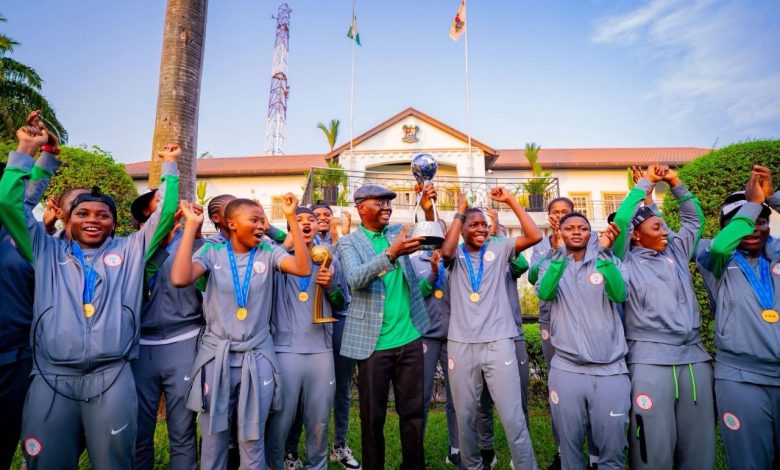
Nigeria loves to celebrate winners. Or so we thought.
In the last few days, we have watched with joy, and growing disbelief, as the Flamingos, Nigeria’s U-17 girls, were showered with rewards for winning the FIFA U-17 Women’s World Cup. And they deserve every kobo of it.
President Bola Tinubu rewarded each player with N100 million. The National Assembly announced a N100 million team reward, while Lagos State Governor Babajide Sanwo-Olu offered each player N10 million and an iPhone 18 Pro Max.
They made history, becoming the first African team to win the title. Nigeria celebrated. As it should.
But what about the others?
What about the Nigerian team at the Youth Olympic Games, whose athletes won three gold medals for the country, only to receive little public recognition? The only reward offer we have heard about is the Nigeria Olympic Committee’s reported $1,000 for each gold medallist.
One thousand dollars for a gold medal won in Nigeria’s green and white?
What about Tobi Amusan, who won silver at the 2025 World Athletics Championships in Tokyo, one of the biggest events on the global sporting calendar, yet returned home without the kind of national recognition that such an achievement deserves?
What about Team Nigeria’s medal winners at the Commonwealth Games? What about the athletes who mounted the podium at the African U-18 and U-20 Championships?
Were they not representing Nigeria? Did their victories not also raise the national flag?
This is the uncomfortable question Nigeria must answer: Why are some champions celebrated while others are forgotten?
Let us be clear. This is not an argument against rewarding the Flamingos. They earned their rewards, and nobody should begrudge them. The argument is that every Nigerian athlete who wins a medal for the country deserves recognition and an appropriate reward.
When D’Tigress won the continental title, the Federal Government rewarded them. When the Super Falcons achieved the same feat, they were also rewarded. That was right.
So why should Amusan, a world championship silver medallist, be treated differently? Why should a Youth Olympic gold medallist receive a fraction of what is offered to a football champion? Does a gold medal won in athletics carry less Nigerian value than one won in football?
The danger of this selective celebration goes beyond the athletes being overlooked. It sends a damaging message to the next generation: that football matters more than every other sport in Nigeria.
It tells a young sprinter in Ilesa, a weightlifter in Jos, a wrestler in Bayelsa or a boxer in Lagos that their sacrifices and achievements are worth less simply because they compete outside football.
And this is where the National Sports Commission (NSC) must answer some serious questions.
Where is the national reward policy? Where is the framework that guarantees recognition and appropriate rewards for every athlete who wins a medal for Nigeria, whether in football, athletics, basketball, weightlifting, wrestling, boxing or any other sport?
National recognition cannot be left to the discretion of the President, the generosity of a state governor or the volume of public applause on social media.
There must be a transparent and consistent system. Without one, deserving athletes will continue to be treated differently, and the country’s reward structure will remain vulnerable to the popularity of particular sports rather than the value of their achievements.
The NSC has a responsibility to address this imbalance and ensure that Nigerian sporting success is celebrated across all disciplines.
The government must also understand that rewarding athletes is not charity. It is an investment in the country’s sporting future.
First, it is motivation. When a young athlete sees Amusan celebrated and rewarded for her global achievements, she has another reason to believe that hard work can pay off. When she sees a world-class performer return home without recognition, that belief is weakened. Worse, talented athletes may begin to consider representing countries where their achievements receive greater appreciation.
Second, it is national pride. Nigeria’s sporting history was not built by football alone. It was built by Chioma Ajunwa, Blessing Okagbare, Tobi Amusan, our wrestlers, weightlifters, boxers and countless other athletes who have carried the national colours to international podiums. Their achievements are part of our sporting heritage and must never be treated as an afterthought.
Third, it is fairness. What is good for the goose must be good for the gander. If Nigeria can find N100 million to reward a football champion, it must also develop a fair reward structure for an athlete who wins a medal at a global championship and brings honour to the country.
Nigeria must get this right.
Honour the Youth Olympic Games gold medallists. Honour Tobi Amusan. Honour the Commonwealth Games medal winners. Honour the African U-18 and U-20 champions.
Their achievements deserve more than occasional mentions and fleeting applause. They deserve a consistent national reward system that recognises excellence wherever it comes from.
They did not compete for themselves alone. They represented Nigeria.
Do not let their medals gather dust while others gather millions.