EDITORIAL: Can the NFF Investigate Itself Over Nigeria’s Football Failures?
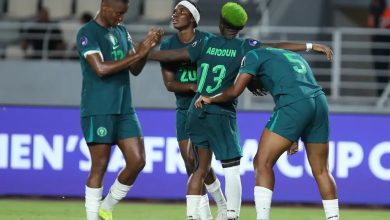
The Nigeria Football Federation has inaugurated a fact-finding committee to investigate the recent setbacks suffered by Nigeria’s national teams, with particular emphasis on the Super Falcons’ failure to qualify for the FIFA Women’s World Cup.
On the surface, this looks like a responsible response to a national football crisis. But beneath the surface lies a fundamental question that the NFF cannot escape: can an organisation credibly investigate a failure for which it may itself bear responsibility?
The NFF says the committee has been established to probe the ‘direct and remote causes’ of the national teams’ poor outings and has given the panel two weeks to submit its report. President Ibrahim Musa Gusau has urged the members to work with sincerity and diligence, while committee chairman Ambassador Fanny Amun has promised that the panel will ‘speak the truth.’
Those are commendable words. But Nigerians have heard commendable words before.
The real test is whether this committee has the freedom, authority and courage to investigate every level of responsibility, including the NFF itself.
The Super Falcons did not suddenly wake up one morning and fail to qualify for the World Cup in isolation. A national team’s performance is the product of a system. Coaches are appointed by administrators. Camps are organised by administrators. Players are registered and supported through administrative structures. Preparations, logistics, funding, contracts, technical appointments and strategic decisions all involve the football authorities.
Therefore, if the NFF is asking why a national team failed, it cannot restrict the search for answers to the players and coaching staff.
The NFF must also be prepared to put itself in the dock.
That is where this inquiry becomes uncomfortable.
If the federation’s decisions contributed to the failure, who will investigate those decisions? If there were administrative mistakes, will the committee identify them?
If the wrong technical decisions were made at federation level, will those responsible be named? If preparations were inadequate, who should answer for that? If warnings were ignored before the crisis reached its present stage, will the committee establish who ignored them?
These are not questions designed to embarrass the NFF. They are the questions a genuine fact-finding exercise must answer.
There is also a danger that the committee could become a convenient mechanism for producing a report rather than producing accountability. Nigeria has seen investigations before. Committees are inaugurated, terms of reference are announced, reports are produced and then, too often, the recommendations disappear into the same administrative machinery that created the problem.
That cannot happen again.
The credibility of this particular committee will depend not on the stature of its members or the seriousness of the inauguration ceremony, but on what it is allowed to investigate and what happens after it submits its report.
The panel includes respected former players, coaches and football administrators, including former Super Falcons captain Desire Oparanozie, former Super Eagles captain Mutiu Adepoju and former Nigeria U20 strategist Ladan Bosso. That experience is valuable. But experience alone does not guarantee independence.
The committee must be allowed to hear from everyone involved, including current and former NFF officials, coaches, players and other stakeholders. It should examine the relevant decisions and documentation and, where necessary, challenge the official narrative.
Most importantly, the committee must not begin its work with predetermined conclusions.
The failure of the Super Falcons should not automatically become the coach’s failure. It should not automatically become the players’ failure. And it should not automatically become the federation’s failure either.
The committee’s job is to establish the facts.
But if the facts eventually point to the NFF, the NFF must have the institutional maturity to accept the findings.
There is an even bigger issue here. Nigeria’s problem may not be one failed qualification campaign. The NFF itself says the committee is examining the ‘poor outings of the National Teams in recent times.’ That suggests a systemic problem rather than an isolated incident.
If that is the case, then Nigerians deserve more than an explanation for one failed campaign. They deserve answers about the structure of Nigerian football.
Why are national teams repeatedly struggling despite Nigeria’s enormous football talent?
Why do administrative controversies frequently overshadow technical preparations?
Why does Nigeria often appear to react to crises instead of preventing them?
Why are lessons from previous failures apparently not translating into sustainable reforms?
And perhaps the most important question of all: Who is ultimately accountable when Nigerian football fails?
The NFF cannot demand responsibility from coaches and players while insulating its own leadership from scrutiny.
If the federation controls the system, it must accept responsibility for the system.
That does not mean every NFF official is guilty of every failure. It means accountability must follow authority. Those who make decisions must be prepared to answer for the consequences of those decisions.
The two-week deadline given to the committee should therefore not become a race to produce a report. The quality of the investigation matters far more than the speed of its completion.
And when the report is ready, Nigerians should not simply be told that ‘lessons have been learnt.’ They should be told what went wrong, who was responsible, what will change and when those changes will be implemented.
Anything less risks turning another national football crisis into another committee exercise.
The NFF deserves credit for acknowledging that something has gone wrong. But acknowledging failure is only the first step.
The real courage will come when the federation is willing to investigate itself with the same determination with which it investigates everyone else.
If this committee can do that, its report could become a turning point for Nigerian football.
If it cannot, it will simply become another document in Nigeria’s long archive of investigations that produced questions, promises and little accountability.
Nigeria does not need another committee for the sake of having a committee. It needs the truth, and the courage to act on it.