CANAL+, LALIGA Join Forces in Major Anti-Piracy Crackdown
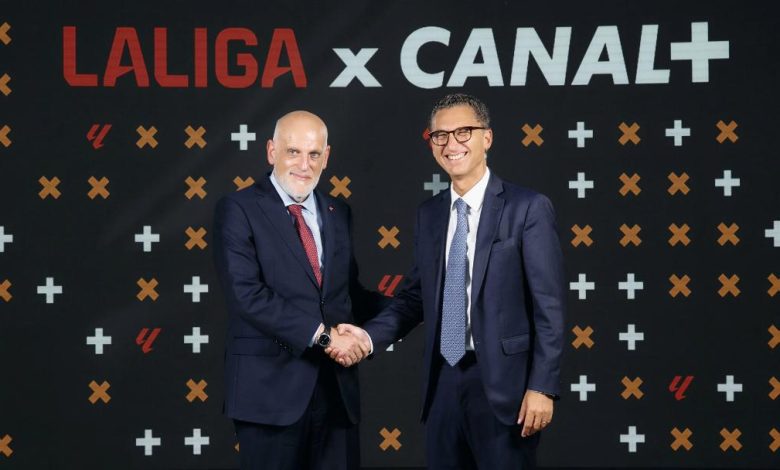
CANAL+ and LALIGA have signed a major anti-piracy partnership covering nearly 50 countries across Europe, Sub-Saharan Africa and Haiti, in a bid to strengthen the fight against the illegal distribution of sports content.
Under the agreement, CANAL+ and LALIGA will share intelligence, coordinate enforcement strategies and intensify action against illegal distribution networks operating across multiple territories.
The partnership represents one of the most significant collaborations between a global broadcaster and a major sports competition in the battle against sports piracy.
Piracy has emerged as a major threat to the sustainability of professional sport, undermining the value of broadcast rights and the investment that supports clubs, youth development, audiovisual production and the wider football ecosystem.
CANAL+ and LALIGA also warned that illegal streaming platforms can expose fans to risks such as data theft, malware and fraud.
The new agreement builds on the longstanding relationship between the two organisations through the distribution of Spanish football across Europe, Africa and Haiti, while expanding their cooperation beyond broadcasting to the protection of sports rights.
CANAL+ CEO Maxime Saada said the scale of the agreement reflected the group’s commitment to combating content piracy and praised LALIGA for its leading role in the fight.
‘Piracy undermines the entire sports ecosystem,’ Saada said, adding that combining the anti-piracy expertise of both organisations would significantly strengthen their ability to take action.
He also called on other players in the sports, audiovisual and creative industries to take greater responsibility in tackling piracy.
LALIGA President Javier Tebas said piracy was among the greatest challenges facing the future of sport and stressed that no organisation could effectively tackle the problem alone.
‘By joining forces with CANAL+, we are bringing together technology, intelligence and operational expertise to protect the value of our competitions, defend the investment made by broadcasters and clubs, and ultimately safeguard the future of football,’ Tebas said.