Fasuba Calls for Stronger Nigerian Athletics Infrastructure
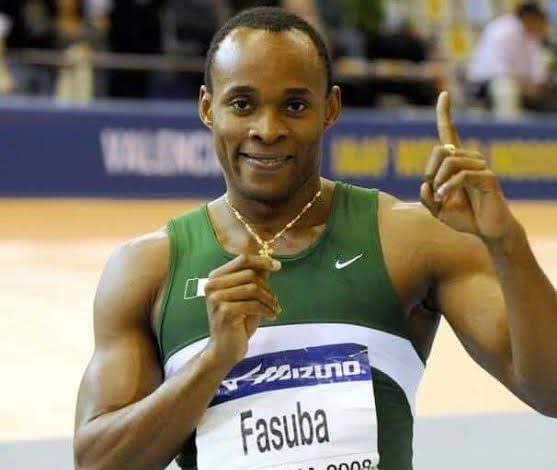
Former World Indoor 60m champion and Nigeria’s 100m record holder, Olusoji Fasuba, has urged Nigeria to invest in homegrown coaching and facilities, warning that lasting success will only come from strengthening local expertise rather than chasing foreign solutions.
Fasuba’s call follows remarks by South African sprint star Akani Simbine, who recently declared that athletes in his country no longer need to move abroad to succeed.
Simbine credited South Africa’s improved coaching and facilities, which he believes now provide everything young athletes need to grow and compete globally.
‘The fact that top athletes can now choose to remain in their own country, trust their coaches, and still compete globally is not luck. It is the result of proper investment, structure, and belief in local expertise. That is where Nigeria needs to get to,’ Fasuba said.
Simbine’s career illustrates the point. He rejected a U.S. scholarship early on and chose to remain in South Africa under long-time coach Werner Prinsloo, a partnership that has lasted nearly 15 years and delivered consistent success.
His stance has inspired rising talents like Bayanda Walaza and Udeme Okon, who both turned down U.S. offers to stay home, while others such as Karabo Letebele opted to train abroad.
Fasuba insists Nigeria must build a system strong enough that staying home becomes a respected option, not a limitation.
‘A nation like Nigeria should be developing its own coaches, strengthening its own facilities, and creating an environment where talent can grow without needing to relocate,’ he said.
His comments contrast sharply with the National Sports Commission’s current strategy of recruiting diaspora athletes to compete for Nigeria.
The Commission’s diaspora committee is preparing a scouting mission at the England Youth Games and the National Schools Championships in England.
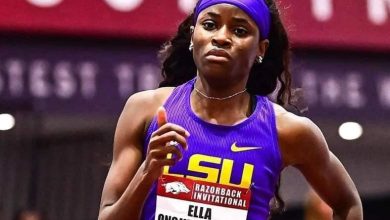
Yet athletes like sprinter Favour Ashe have openly admitted that Nigeria’s lack of elite training infrastructure was a key reason for seeking a switch in allegiance. Others highlight capacity gaps at both the Athletics Federation of Nigeria and the NSC, as well as the absence of proper welfare programs.
Observers point to the case of Annette Echikunwoke, a diaspora athlete who switched allegiance to Nigeria but missed competing at the Tokyo Olympics in 2021 due to administrative and technical incompetence within the Athletics Federation of Nigeria.
Many now wonder if the athletes being scouted could face similar frustrations, potentially reversing their allegiance back to other nations.