Boycott looms as NSC Trims 2026 National Sports Festival Events From 40 to 15 Sports!
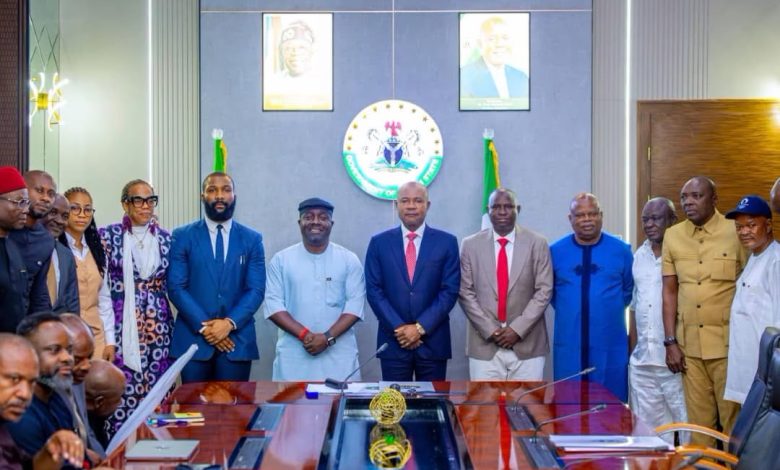
The 2026 National Sports Festival, tagged Coal City Games, is facing a boycott threat from several states after the National Sports Commission (NSC) unilaterally reduced the number of events from 40 to just 15, with six optional sports, according to The Guardian.
The Forum of State Directors of Sports/General Managers condemned the move, describing it as a breach of trust and governance.
In a letter signed by secretary Tunde Ajibike of Oyo State, the Forum insisted that Traditional Sports, Olympic Sports and Board Games must be reinstated.
‘Failure to do so will compel the Directors of Sports/General Managers across the country to withdraw participation from the Festival,’ the statement read.
The Forum accused the NSC of excluding them from the selection process despite an earlier resolution at the Calabar meeting that state directors would be actively involved.
They argued that the Commission does not directly manage athletes and coaches at the state level and therefore cannot appreciate the resources invested in preparing athletes for the removed sports.
Northern states have joined the protest, with Niger State Sports Commission chairman Abdullahi Masu describing the reduction as ‘unjustifiable and detrimental to sports development.’
He warned that excluding popular team sports such as football, volleyball, handball and hockey would waste years of investment and marginalise regions with comparative advantages in those disciplines.
‘Participation in the festival under such conditions would amount to a waste of public funds, as many athletes would be denied the opportunity to compete,’ Masu said.
He further cautioned that the exclusion could increase unemployment among athletes and undermine grassroots sports development.
Critics see the NSC’s decision as autocratic, especially given that the Commission is still reeling from governance issues. The constitutionally recognised board has not been constituted, meaning the NSC is operating in a legal vacuum.
Meanwhile, Bukola Olopade, the NSC Director General, defended the move, describing the protests as ‘unfortunate.’
According to the Guardian, Olopade insisted the decision was reached at the last National Council of Sports Meeting in Calabar.
‘It is sad that some people don’t understand the present reality of things. To host the National Sports Festival is expensive and the NSC is trying to make things easy for the host states. This is not new. Even at the Olympic Games level, the number of sports were reduced, and there was nothing like protest. When last did our handball, volleyball, and other sports qualify for the Olympic Games?’ Olopade was quoted as saying.
Olopade could be referring to the Paris 2024 Olympics where the number of events was reduced by 10. The Paris Games featured 329 events, down from 339 in Tokyo, marking the first time since Rome 1960 that the Olympics had fewer events than the previous edition.
The next Games in Los Angeles 2028 are expected to expand again, with sports like cricket, flag football, and lacrosse set to join the program, thereby putting holes in Olopade’s argument.
He added that affected federations should organise their own annual programmes, which the NSC is ready to support financially.
‘You don’t need to wait for the National Sports Festival before you organise events for your federation. We are going on with 15 sports at the Coal City Games,’ he stated.